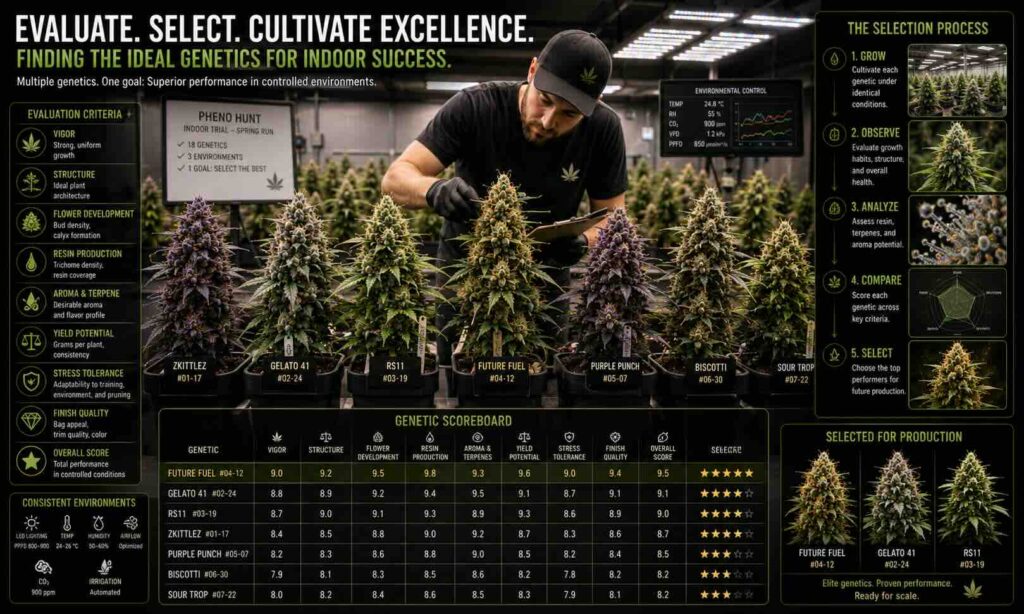
Indoor cannabis cultivation offers growers a high level of environmental control, allowing them to manage lighting, temperature, humidity, airflow, and other important factors throughout the growing cycle. However, even the most sophisticated indoor setup cannot compensate for poor genetic selection. Choosing the right genetics remains one of the most important decisions a grower can make when planning an indoor cultivation project.
Different cannabis cultivars respond differently to indoor environments. Some are naturally suited to compact spaces and controlled conditions, while others may require more room or specialized management techniques. Understanding how genetics interact with indoor cultivation helps growers make informed decisions and achieve more consistent results.
Why Genetics Matter Indoors
Genetics determine many of the characteristics that influence cultivation success. Plant structure, growth rate, adaptability, vigor, flowering behavior, and overall consistency are all heavily influenced by genetic background.
Indoor growers often operate within limited spaces, making plant size and growth patterns particularly important considerations. Choosing genetics that align with the available environment can simplify cultivation and improve overall efficiency.
Strong genetics also provide greater predictability. Cultivars that have been carefully bred and stabilized generally offer more consistent performance across multiple growing cycles.
This consistency helps growers plan and manage their cultivation projects more effectively.
Evaluating Plant Structure
One of the first factors indoor growers should consider is plant structure. Some cultivars naturally develop compact growth patterns that fit well within indoor environments, while others may require more space and training.
Understanding how a cultivar tends to grow allows cultivators to select genetics that match their available area. Indoor environments often benefit from plants that respond well to pruning, training, and canopy management techniques.
Plant structure also influences airflow, light distribution, and overall cultivation efficiency. Selecting appropriate genetics can make environmental management significantly easier.
Careful planning often begins with understanding how a plant will occupy the available space.
Stability and Consistency
Stability is one of the most valuable characteristics in indoor cultivation. Growers benefit from cultivars that express predictable traits and perform consistently over time. Stable genetics help reduce variation and make cultivation outcomes easier to evaluate.
Professional breeding programs invest significant effort into stabilizing cultivars through multiple generations of selection and refinement. This process helps create reliable genetics that support long-term cultivation success.
Growers interested in exploring professionally developed indoor cannabis genetics can learn more through Ministry of Cannabis. Understanding breeding principles helps cultivators appreciate the value of consistency and stability.
Reliable genetics create a stronger foundation for environmental optimization.
Matching Genetics to Cultivation Goals
Different growers often have different objectives. Some prioritize cultivation simplicity, while others focus on genetic diversity, breeding potential, or specific plant characteristics. Defining these goals before selecting genetics can simplify the decision-making process.
Indoor growers should consider factors such as available space, cultivation experience, environmental control capabilities, and overall project objectives. Matching genetics to these conditions improves the likelihood of achieving satisfactory results.
The best cultivar is not necessarily the most popular one. It is the cultivar that best matches the grower’s specific environment and goals.
Thoughtful selection often contributes more to success than any single cultivation technique.
The Future of Indoor Cannabis Genetics
Modern breeding continues producing cultivars specifically designed for controlled environments. Advances in plant science, phenotype selection, and genetic analysis help breeders refine cultivars that perform well indoors.
As breeding programs continue evolving, growers will likely gain access to an even wider range of genetics optimized for indoor cultivation. This diversity creates opportunities for greater customization and more specialized growing approaches.
Additional information regarding cannabis cultivation guides and educational resources can be explored through https://www.cbd.fr/blog/guides.
The future of indoor cultivation will continue benefiting from innovation, genetic diversity, and careful breeding practices.
Final Thoughts
Choosing genetics for indoor cannabis cultivation involves more than selecting a well-known cultivar. It requires evaluating plant structure, stability, cultivation goals, and environmental compatibility. Strong genetics provide the foundation for successful cultivation and help growers make the most of their indoor environments.
By focusing on quality genetics and matching cultivars to specific growing conditions, cultivators can create a more efficient, predictable, and rewarding indoor cultivation experience.